
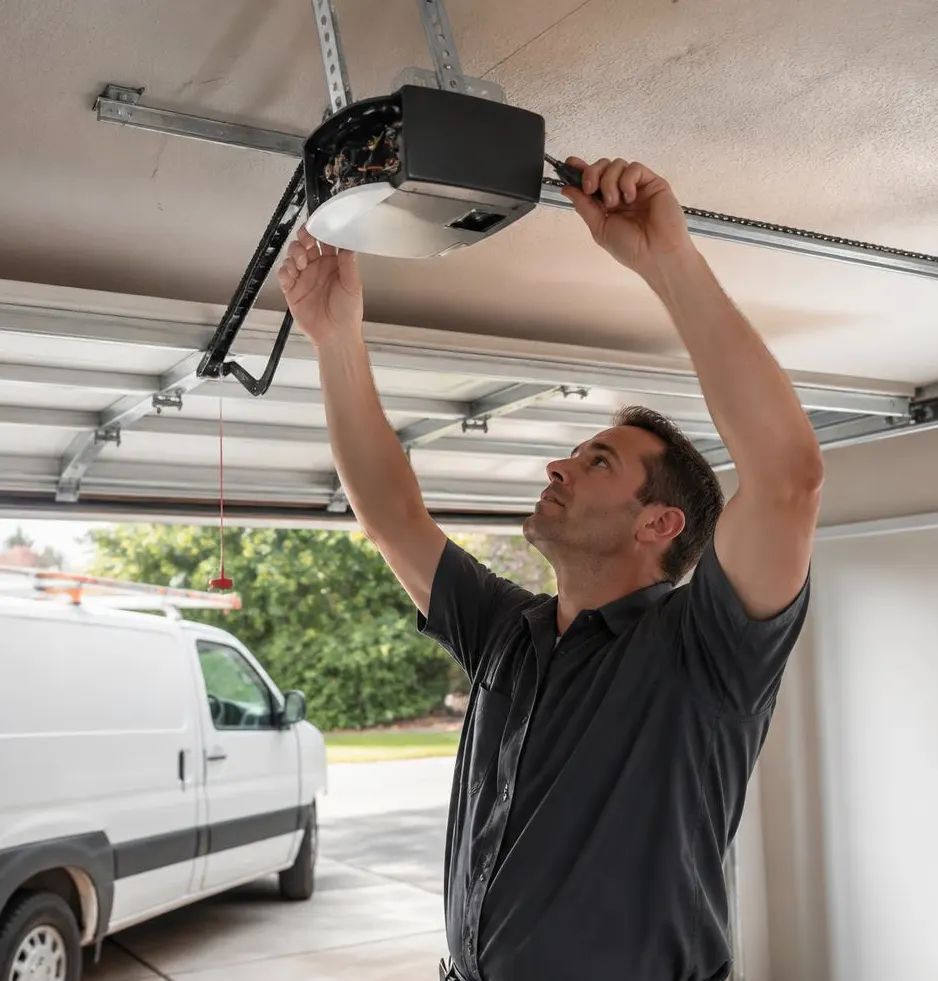
The Mistake That Starts It All
It usually begins the same way: the door won't open, a quick search turns up a video showing someone swap a spring in twenty minutes, and the whole job looks like tightening a few bolts. The spring itself is sitting right there above the door, visible and seemingly simple. Buying a replacement spring costs far less than calling someone out, and the tools look basic — a couple of rods, a wrench, maybe a ladder. That combination of visible simplicity and low cost is exactly what makes this one of the most dangerous DIY jobs in the house, because none of what makes it dangerous is visible at all.
What's Actually Stored in That Spring
A torsion spring mounted above a residential garage door is wound tight enough to lift a door that often weighs well over a hundred pounds. That tension has to go somewhere when the spring is loosened, cut, or breaks on its own. If it releases in a controlled way, nothing happens. If it releases uncontrolled — because the wrong tool was used, the bar slipped, or the spring was already stressed past its limit — that stored energy comes out instantly, as a violent, unpredictable snap.
How People Actually Get Hurt
- Winding bars slipping or being substituted with screwdrivers. A screwdriver can shear or shoot backward out of the winding cone with enough force to break fingers, hands, or facial bones.
- The spring unwinding mid-job. If a bar isn't fully seated or someone lets go too early, the shaft spins fast and hard, and anything near it — hands, face, loose clothing — gets caught.
- Flying metal fragments. A spring that snaps under tension can send pieces of coiled wire several feet, which is how people end up with eye injuries and lacerations from a job they thought they'd already finished safely.
- The door itself falling. With the spring disconnected and no backup clamp in place, an unsupported door can drop suddenly, which is how feet, hands, and sometimes heads get caught underneath.
- Wrong spring for the door. A spring rated for the wrong weight or wound in the wrong direction won't balance the door correctly, and the mismatch often isn't obvious until the door is already swinging on cables that are now under uneven load.
None of these require bad luck or carelessness in the way people usually picture it. They happen to people who read the instructions, who are being careful, who just didn't know how much force was actually involved until it was already moving.
Why Local Conditions Make This Riskier
Springs don't fail at convenient, predictable moments. Around Jennings County, the wide seasonal swings do real work on a spring's metal over time. Cold winter mornings — especially after an ice storm, when road salt and moisture have worked their way into the garage — make steel more brittle and more prone to a sudden snap rather than a gradual loosening. Humid summer months add rust and corrosion that weaken coils unevenly, so one side of a spring can be noticeably more fatigued than the other without any outside sign. That means a spring can look fine right up until the moment it isn't, which is exactly the wrong time to be improvising a repair in the driveway.
The Warning Signs Worth Taking Seriously
- The door suddenly feels much heavier when lifted by hand with the opener disconnected.
- A loud bang from the garage, often mistaken for something falling, that's actually the spring breaking.
- A visible gap in the spring's coil when the door is closed.
- The opener straining, reversing, or struggling to lift the door partway.
- The door looking crooked or sitting unevenly in its tracks.
Any one of these means the spring is already compromised. At that point, the door is storing less safe, more unpredictable tension than it was designed for, and every additional open-close cycle adds risk.
What Actually Prevents the Injury
- Never substitute tools. Winding bars are sized and shaped specifically for this job; screwdrivers, pliers, and improvised rods don't seat the same way and are far more likely to slip.
- Always use two bars, never one. A single bar gives nothing to brace against if it shifts.
- Clamp the door shut before touching the spring. Vice grips on the track below the bottom roller keep the door from dropping if something goes wrong mid-repair.
- Keep the area clear. Kids, pets, and bystanders should be nowhere near the door while a spring is under tension.
- Match the replacement spring exactly. Wire gauge, coil diameter, length, and wind direction all have to match the original or the door won't balance correctly, straining the opener and cables going forward.
- Count turns precisely. Under-winding or over-winding changes how much force is stored and how the door behaves when it releases.
Taken together, this isn't a list of tips — it's the difference between a routine repair and an ER visit, and it's why most professionals won't do this job without the right bars, a clamp, and a second set of hands.
When to Call Butlerville Garage Door
If your door has any of the warning signs above — extra weight, a bang from the garage, a visible gap in the coil, or a door that's suddenly sitting crooked — that's the point to call rather than troubleshoot. Our Spring Replacement service uses the correct bars, clamps, and a spring matched to your door's exact weight and wind direction, done with the door secured the entire time. If it's been a few years since anyone's looked at the springs and cables on your door, our Garage Door Maintenance visit checks for the early fatigue and corrosion that Indiana's winters and humid summers cause, before it turns into a sudden failure.
If your garage door in Butlerville, IN or anywhere around Jennings County is showing signs of spring trouble, call Butlerville Garage Door and let us handle the part of the job that actually requires the right tools and experience.