
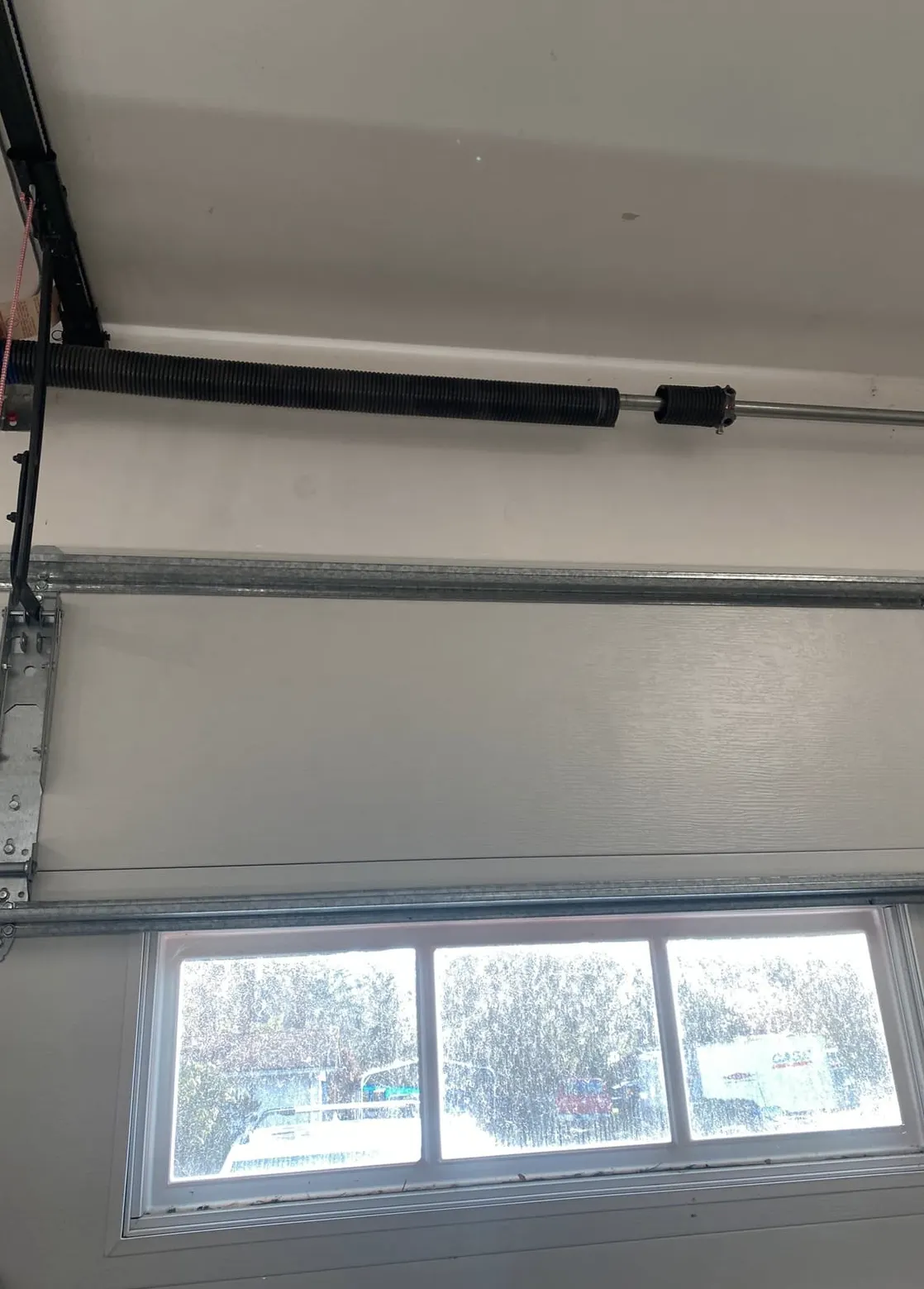
What a Technician Sees on These Calls
A typical service call this time of year starts with "the opener just stopped working." The customer assumes the motor died. More often, the opener didn't die on its own — it was doing extra work for months because the door itself was out of balance. The springs had lost tension, the door got heavier to lift, and the opener's gears or drive belt finally gave out trying to compensate. By the time we get there, we're not just fixing an opener, we're also replacing springs that should have been caught earlier.
This pattern shows up a lot heading into winter. Cold temperatures stiffen springs and thicken old lubricant, tracks pick up grit and road salt from driveways, and a door that was borderline balanced in October can be noticeably off by December. An unbalanced door doesn't always announce itself with a loud bang — sometimes it just makes the opener strain a little harder every single day.
Why Balance Matters for the Opener
Garage door openers are built to do one job: pull a door that's already properly counterbalanced by its springs. The opener isn't designed to lift serious weight on its own. When springs weaken or stretch, the door gets heavier on one side or overall, and the opener's motor, gears, and drive system take on load they were never meant to carry. Over weeks and months, that shows up as:
- Slower opening and closing than before
- Grinding, straining, or louder motor noise
- The door reversing partway up or down for no clear reason
- The opener working fine at first, then stalling halfway through the cycle
- Premature failure of the opener's gear kit, belt, or chain
A simple balance test tells you which problem you actually have before you spend money on the wrong repair.
Tools You'll Need
- A step stool or ladder (only if you need to reach the release cord)
- Work gloves
- A helper is optional but useful for safety
How to Test Your Garage Door's Balance
- Close the door completely so you're starting from a known position.
- Locate the manual release cord (usually a red handle hanging from the opener trolley) and pull it to disconnect the door from the opener. This step is required — you cannot get an accurate reading with the opener still engaged.
- Lift the door by hand slowly, using a smooth, steady motion. Do not force it.
- Stop at roughly waist height and let go of the door.
- Watch what the door does. A properly balanced door will stay put, or drift down only an inch or two. It should feel light enough to lift with one hand through most of the motion.
- Reconnect the opener by pulling the release cord again (or following your opener's reconnect instructions) once you're done testing.
Reading the Results
If the door stayed roughly in place, your springs are doing their job and any noise or slowness is more likely an opener, track, or roller issue. If the door slammed shut, shot upward, or felt noticeably heavy on one side as you lifted it, the springs are out of balance and the opener has been compensating for it.
What a Homeowner Can Do vs. What Needs a Technician
The balance test itself is safe for a homeowner to perform — it only involves lifting the door by hand with the opener disconnected. What you should not attempt yourself is adjusting spring tension, replacing a spring, or taking apart the spring assembly. Garage door springs are under extreme tension and have caused serious injuries to DIYers who tried to adjust them with basic tools. Diagnosing the imbalance is a homeowner task; correcting it is not.
When to Call Butlerville Garage Door
If your balance test shows the door isn't holding its position, or if you're already hearing the opener strain, that's the point to call us rather than keep running it. We offer spring replacement to restore proper counterbalance, and garage door maintenance visits that check spring tension, lubricate hardware, and inspect cables and rollers before winter driving and temperature swings make small issues worse. Catching an unbalanced door early is almost always cheaper than replacing a burned-out opener.
If you're in Butlerville, North Vernon, Columbus, Seymour, or anywhere else in Jennings County and your garage door doesn't pass this test, give Butlerville Garage Door a call — we'll get it balanced and your opener out of harm's way before winter sets in.